


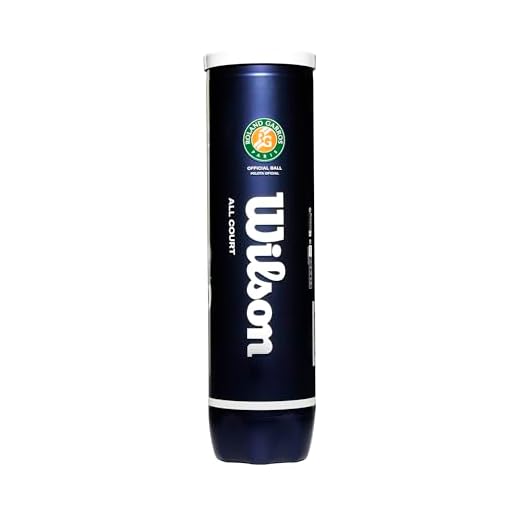
The Wilson Roland Garros is more than just a tennis ball with a fancy name. As the official ball of the French Open since 2020, it carries Grand Slam credentials that few competitors can match. But does that tournament pedigree translate into real performance for club players in the UK?
Wilson’s partnership with Roland Garros has produced a range of balls engineered with specific technologies aimed at durability, consistency, and visibility. Around 65,000 of these balls are used during each French Open tournament, so they need to perform under the most demanding conditions in professional tennis.
I’ve spent time hitting with the Wilson Roland Garros to find out whether they’re worth the premium over standard options, or whether you’re simply paying for the branding.
Quick Overview
| Detail | Information |
|---|---|
| Official name | Wilson Roland Garros |
| Ball type | Pressurised |
| Available variants | All Court, Clay Court |
| ITF approved | Yes |
| Core | 100% natural rubber |
| Available sizes | 3-ball can, 4-ball can, 24-can case |
| Price (approx.) | Check latest price |
| Best for | Intermediate to advanced players |
The Range
Wilson produces the Roland Garros ball in two main variants, each designed for different playing surfaces.
All Court
The All Court version features a thicker felt designed to handle the abrasion of harder surfaces. This makes it the more versatile option and the one most UK players will want to consider, given that the majority of courts here are hard court or artificial grass. It’s engineered to resist scuffing on tougher surfaces whilst still providing a consistent bounce and good visibility throughout play.
Clay Court
The Clay Court variant is purpose-built for the demands of clay surfaces. It uses what Wilson calls “ClayShield x Felt,” a treatment designed to limit moisture absorption and reduce the amount of clay debris that embeds into the felt. This keeps the ball lighter and more visible for longer on clay, where balls can quickly become heavy and discoloured. If you’re playing on one of the artificial clay courts that have become increasingly popular at UK clubs, this is the variant to go for.
Both variants share the same 100% natural rubber core, which Wilson has designed with a slightly harder compound than their hard court balls. The reasoning is that clay court tennis tends to produce longer rallies with heavier spin, so the core needs to maintain its resilience and consistency over extended points. This core technology carries across to the All Court version too.


On Court Performance
Feel and Bounce
Fresh out of the can, the Wilson Roland Garros balls have a satisfyingly firm feel without being overly hard. There’s a noticeable quality to the felt that you can feel immediately when squeezing the ball. The bounce is lively and springy for the first 15 minutes or so before settling into a more regulated rhythm, which is typical of any premium pressurised ball.
What stands out is the weight and balance of each ball. They feel consistent across a can, which sounds like a minor detail but is something that cheaper balls often get wrong. When you’re mid-rally, that consistency translates to predictable shot-making and better timing.
Spin Response
This is where the Roland Garros balls really distinguish themselves. Given that they were designed for a tournament synonymous with topspin tennis, they respond exceptionally well to spin. Topspin shots kick with genuine bite off both the racket and the court surface, and slices stay low with good skid.
For players who rely on heavy spin as a core part of their game, these balls reward that style of play. The felt grips the strings well on contact, creating a satisfying sensation as the ball leaves the string bed. If you’re using a spin-oriented racket like the Babolat Pure Aero or similar, the combination is particularly effective.
Durability
This is the area where the Roland Garros balls genuinely impress. The felt holds up well over extended sessions, fluffing up gradually rather than deteriorating rapidly. Testing on hard courts, the All Court variant maintained good performance for around three to four hours of hitting, which is above average for a pressurised ball.
The Clay Court version is particularly impressive on artificial clay. The moisture-resistant felt treatment does its job, keeping the balls noticeably lighter and more visible compared to standard balls used on the same surface. Debris pick-up is minimal, which is a real advantage during longer sessions where traditional balls can become heavy and unpleasant to hit.
After the initial few hours, there is a gradual decline in performance as you’d expect from any pressurised ball. Air pressure drops and the felt roughens, but the decline is steady rather than dramatic. You can comfortably use these for a second session the following day and still get a decent hit out of them.
Visibility
The optic yellow felt maintains its brightness well, even on clay surfaces where balls tend to lose their colour quickly. This is a genuine practical advantage, particularly during winter months when natural light is limited or when playing under floodlights. The Roland Garros branding on each ball is a nice touch aesthetically, though obviously that’s not going to improve your backhand.
Who Are These Balls For?
The Wilson Roland Garros balls sit in the premium category, and they perform accordingly. They’re best suited to intermediate and advanced players who will notice and appreciate the difference in consistency, spin response, and durability compared to budget options.
These balls are ideal if you:
- Play regularly (two or more times per week) and want a consistent, reliable ball
- Have a spin-heavy game and want balls that reward topspin technique
- Play on clay or artificial clay courts regularly (Clay Court variant)
- Play competitive club matches and want tournament-quality balls
- Value durability and don’t want balls dying after an hour of play
You might want to look elsewhere if you:
- Are a beginner still developing your technique. Standard balls like the Head Championship will serve you well at a lower price point
- Play very casually and don’t want to spend more than necessary on balls
- Primarily want pressureless balls for extended practice or use with a ball machine
How They Compare
vs Dunlop Fort All Court
The Dunlop Fort is the traditional choice at many UK clubs and offers excellent feel and control. The Wilson Roland Garros edges it on durability, particularly in terms of felt longevity and resistance to fluffing. The Fort arguably has a slightly softer feel at initial contact, which some players prefer for touch shots. Both are premium options, and the choice between them often comes down to personal preference and which surface you play on most.
vs Wilson US Open
Wilson’s other Grand Slam ball is designed primarily for hard court play. The US Open uses an extra-duty felt that’s thicker and more durable on abrasive surfaces, whilst the Roland Garros All Court felt is slightly different in construction. For UK hard courts, both perform well, but the US Open may edge it slightly on pure hard court durability. If you split your time between surfaces, the Roland Garros All Court offers better versatility.
vs Head Tour
The Head Tour is another strong competitor in the premium ball category, offering excellent spin potential and consistent bounce. The Roland Garros matches it closely on overall performance, with the Wilson perhaps having a slight advantage on felt durability and the Head offering marginally better initial crispness. Both are excellent choices for competitive play.
For a full breakdown of the best tennis balls across all categories and price points, check out our complete guide to the best tennis balls.
Choosing the Right Variant for Your Courts
If you’re unsure which variant to go for, here’s a straightforward guide based on the surfaces most common at UK clubs.
Choose All Court if you play on: hard courts, tarmac, acrylic, carpet, or artificial grass. This covers the majority of courts at UK clubs and parks.
Choose Clay Court if you play on: natural clay or artificial clay (which has become significantly more popular at UK clubs in recent years).
If you play across multiple surface types, the All Court variant is the safer choice. It won’t perform quite as well on clay as the dedicated Clay Court version, but it handles all surfaces competently.
Complete Your Setup
Getting the most from quality balls means pairing them with the right equipment.
Rackets: Your racket choice matters more than you might think when it comes to ball performance. If you’re still finding your ideal frame, we’ve put together guides for beginners, intermediate players, and advanced players.
Strings: The interaction between your strings and the ball is where spin and feel are generated. Our complete guide to tennis strings covers everything you need to know about finding the right setup.
Shoes: Proper footwear for your court surface is essential. Check our best tennis shoes guide for recommendations across all surfaces.
Bags: Quality balls deserve proper storage. A good tennis bag with a dedicated compartment keeps your unused cans in good condition.
Ball Machines: If you’re serious about improving, a ball machine paired with quality balls is one of the fastest ways to groove consistent technique.
The Verdict
The Wilson Roland Garros balls deliver on their Grand Slam promise. They’re a genuinely premium product that performs noticeably better than budget alternatives in terms of consistency, spin response, durability, and visibility.
The All Court variant is the one most UK players should reach for. It handles the surfaces commonly found at British clubs well, offers impressive felt durability, and provides the kind of consistent bounce that helps you trust your timing throughout a match.
The Clay Court variant is a worthwhile investment if you regularly play on clay or artificial clay. The moisture-resistant felt and reduced debris pick-up make a tangible difference over the course of a session, and the performance holds up well during longer matches.
At around £8 per can of four, they sit at the upper end of the market. For casual social players, that premium is hard to justify when cheaper options will do the job. But for club players who play regularly and value consistency, or anyone competing in matches where ball quality matters, the Wilson Roland Garros is an excellent choice that I’d happily recommend.
Rating: 8.5/10
What we like
- Excellent spin response, particularly for topspin-heavy players
- Above-average durability for a pressurised ball
- Consistent feel and bounce across a can
- Clay Court variant genuinely performs better on clay than standard balls
- ITF approved for competitive play
- Strong visibility that holds up well
Considerations
- Premium pricing compared to standard balls
- The branding doesn’t make them play any better than their technology does
- All Court variant, whilst versatile, doesn’t specialise on any single surface
- Like all pressurised balls, shelf life is limited once opened
Tennis Gear Guide provides honest, thorough equipment reviews to help UK players make informed purchasing decisions. Our assessments combine specification analysis, player feedback, and practical playing characteristics to deliver recommendations you can trust.
More Reviews From TGG

Acemate S10 Tennis Robot Review
I will admit something before we start. Before my first session with the Acemate S10,…

Wilson Defyer vs Blade
For a long time, the choice within Wilson’s range was simple for serious baseliners. You…

Defyer vs VCORE vs Aero
When I published my Wilson Defyer review, I promised a proper answer to the question…

Wilson Defyer Review
No racket in recent memory has been discussed as much before launch as this one,…

Head Extreme 2026 Review
Head has updated the Extreme for 2026, and on paper it looks like the most…

PUSUN PT-Max C Review
PUSUN has built a reputation for packing high-end ball machine features into prices that undercut…


